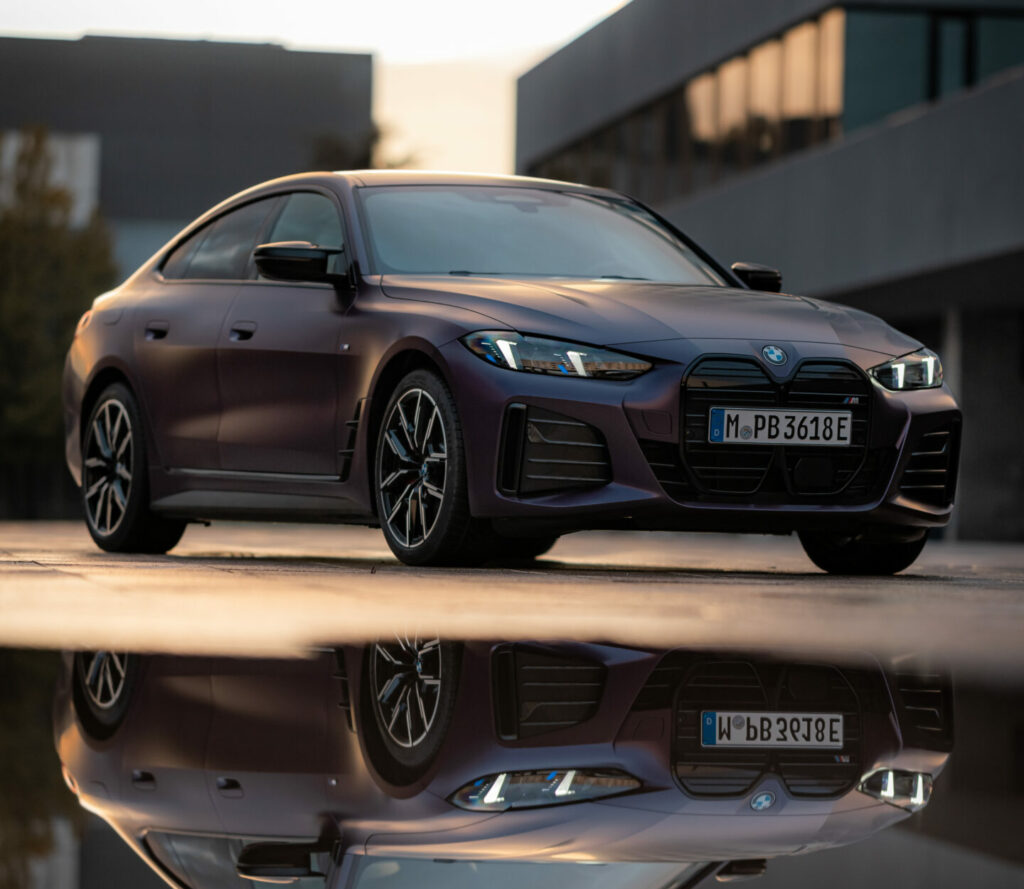


Buying a used electric car: 7 things to consider before buying
Following closely behind the new car market, driven in particular by company cars and leasing, electric vehicles are gradually establishing themselves on the used car market. With several years of hindsight and an increasingly wide choice of models, it is now possible to find recent electric cars at attractive prices, particularly compared with their original list price.
But buying a used electric car also raises questions that were less common with conventional powertrains: What condition is the battery in? How much real-world range does it still offer? And with technology evolving so quickly, is buying used really a good idea?
That last question is a valid one. Longer ranges, ever-faster charging and new generations of batteries mean that the market is progressing quickly. But that does not necessarily mean that an electric car which is a few years old is already outdated. The situation is ultimately much the same as with conventional powertrains: when buying any used car, what matters is knowing what you are buying, what condition it is in and what you intend to use it for.
Battery health, charging, vehicle history, warranties and available incentives: here are 7 things to check before buying a used electric car.
1. Battery health
Of all the questions that still surround electric cars, this is probably the one that comes up most often: how long will the battery last?
It is well documented that a lithium-ion battery gradually loses some of its original capacity over time and through repeated charging cycles. This is perfectly normal, but understandably remains a concern for potential used-car buyers.
This is where State of Health (SoH) comes in. Expressed as a percentage, it provides an indication of the battery’s current condition compared with its original characteristics. When it comes to battery health, there is little reason to rely on assumptions when there are ways to obtain a much clearer answer.
On many used electric BMW models, for example, the Battery Health Quick Report provides an indication of the battery’s current capacity. Under the BMW Premium Selection programme, the high-voltage battery is also among the components inspected before the car is certified.
Rapid advances in battery technology do not fundamentally change this logic. The arrival of a newer, more efficient generation does not prevent a battery that is several years old from still performing perfectly well. What matters when buying used is its actual condition at the time of purchase.
This is where buying from a professional retailer really makes sense, as it gives you access to reliable information about the battery’s actual condition and how it has been checked.
2. Real-world range
“How many kilometres can it do on one charge?” sounds like the most straightforward question. The answer is slightly less straightforward.
The official range measured under the WLTP test procedure provides a useful basis for comparing different models, but it will not necessarily reflect the range you experience every day. Its main advantage is that it provides a standardised testing method.
Several external factors can affect range in everyday driving:
- the outside temperature;
- the type of journey;
- your driving speed;
- your driving style;
- your use of heating or air conditioning;
- the load being carried.
A car making the daily round trip between Arlon and Luxembourg, for example, will not have the same charging requirements as one regularly covering several hundred kilometres on the motorway.
In our region, winter and its lower temperatures also need to be taken into account, as cold weather can temporarily reduce the available range.
The right approach is therefore not necessarily to look for the model with the greatest theoretical range, but for one that provides a comfortable margin for your usual journeys and offers consistent performance. Battery thermal management, vehicle efficiency and onboard equipment can also influence performance under certain conditions, with manufacturers using different technologies to reduce the impact of external factors.
3. Charging speed
Two electric cars with a similar range can offer very different experiences on a long journey. How quickly they can recover energy can be just as important as the size of their battery, if not more so.
Charging performance varies depending on the model, generation and equipment being used.
For example, BMW currently quotes rapid charging from 10 to 80% in around 30 minutes on some models. Its latest Neue Klasse technology takes this further: the BMW iX3 50 xDrive can recover up to 372 kilometres of range in just ten minutes under optimum conditions, thanks in part to charging power of up to 400 kW. [bmwgroup.com], [bmwgroup.com]
When buying a used electric car, it is therefore worth checking:
- the maximum AC charging power the car can accept;
- the maximum DC charging power it can accept;
- the charging cables supplied with the vehicle.
A huge battery is not necessarily essential if you can easily recharge at home every night. On the other hand, good rapid-charging performance can make a significant difference if you regularly cover long distances.
4. Your charging options
This is actually something worth considering before choosing a model, because it applies to any electric car, whatever your final decision. Where, when and how will you be able to charge your next car?
Do you have a garage or parking space with a home charger? Can you charge at work? Or will you mainly depend on the public charging network?
The answer will have a major influence on which vehicle suits you best.
If you only drive a few dozen kilometres each day, a moderate range combined with overnight home charging may be more than sufficient. On the other hand, drivers who regularly make longer journeys will probably want to prioritise a model with strong rapid-charging capabilities.
Before buying, a quick look at your everyday routine is therefore often more useful than a long specification sheet.
Replay tip: take the journeys you make during a typical week, add up the kilometres and consider where the car could realistically be charged. Remember to include occasional longer trips in your thinking, but without giving them too much importance. By focusing primarily on your everyday needs, you will already have a much clearer idea of what you actually require.
5. Vehicle history and warranties
Electric or combustion-powered, a used car is still a used car. Its history matters.
Mileage, maintenance, possible repairs and the vehicle’s origin all help to provide greater reassurance when making a purchase.
This is one of the advantages of buying from a professional retailer and choosing a certified used car.
In Replay by Bilia showrooms, the vehicles offered have been purchased and maintained within their brands’ official networks. Their history and number of previous owners are known, and their condition is checked when they arrive.
The teams carry out detailed technical and visual inspections of the vehicles. This makes it possible to offer a minimum one-year warranty, which can in some cases extend to four years depending on the brand and applicable conditions.
In the case of used BMW and MINI vehicles, for example, certified electric models benefit from a two-year warranty and are checked according to a range of specific criteria.
6. Running costs… and available incentives
Beyond the price displayed on the windscreen of a used electric car, several factors need to be considered to get a clear picture of its real cost.
To make a fair comparison between two cars, you should also take into account:
- electricity consumption;
- the cost of charging at home or at public charging stations;
- your annual mileage;
- insurance;
- maintenance;
- tyres.
Good to know: Luxembourg also offers an incentive for used electric cars
This is a relatively little-known advantage and one that stands out within the Greater Region: Luxembourg’s incentives for electric mobility are not limited to new cars.
Under the Klimabonus Mobilitéit scheme, Luxembourg offers €1,500 towards the purchase of a used electric car. To qualify, the vehicle must, among other conditions, be at least three years old. Both the vehicle and the purchaser must meet the requirements of the scheme, including a minimum ownership period of two years. The current scheme is scheduled to run until 30 June 2030. [environnem….public.lu], [gouvernement.lu]
As the conditions and application process may change, it is advisable to check your eligibility at the time of purchase via Luxembourg’s official government websites or with a sales adviser.
But the potential financial advantages of an electric car do not end with an incentive.
Routine maintenance on an electric car involves fewer mechanical service items than on a combustion-engine model. There are no engine oil changes or spark plugs to replace, for example. That does not mean there are no maintenance costs at all: tyres, brakes, suspension components, air conditioning and other parts still need to be regularly checked and maintained.
The most useful calculation is therefore the total cost of the vehicle based on your own usage over the time you plan to own it, rather than simply its purchase price.
7. Choose an electric car that fits your life, not the other way around
This final piece of advice is probably the most important.
For some drivers, a used electric car can be an excellent choice. For others, a petrol, diesel or hybrid model will remain better suited to their needs.
Someone who drives 40 kilometres a day, has access to home charging and only occasionally makes long journeys will not have the same requirements as someone covering several hundred kilometres every day across the Greater Region.
Before searching for “which electric car should I buy?”, ask yourself a few questions instead:
How many kilometres do I drive each day? Where will I charge? How many long journeys do I make each year?
How much range do I really need?
Ultimately, the best electric car is not necessarily the one with the biggest battery, the fastest charging or the latest technology.
It is the one that suits your everyday life and your budget.
Why you should not worry about a used electric car quickly becoming outdated
Electric cars will continue to improve. Ranges will increase, charging times will fall and new technologies will emerge. An electric car bought today will therefore probably no longer feature the very latest technology in a few years’ time. But newer technology does not automatically make what came before it obsolete or unusable.
An electric car with a battery in good condition, enough range for your journeys today and charging capabilities that suit your daily routine can perfectly well continue meeting those needs for years to come.
However, it would be too simplistic to judge a used car solely against newer technologies already available on a new model, or those that may arrive tomorrow. Technological progress is part of the automotive industry and certainly not exclusive to electric cars.
The key question is simply:
“Does this car meet my needs today, and is it likely to continue doing so tomorrow?”
Real-world range, charging, battery health, vehicle history, running costs, available incentives and warranties all need to be weighed up when deciding whether a used electric car is the right choice for you.
The warranties, inspections and advice provided by a professional retailer can therefore offer considerable additional reassurance when buying a certified used electric car.
So rather than focusing too much on what may arrive tomorrow, you can focus on the quality of the car available today.